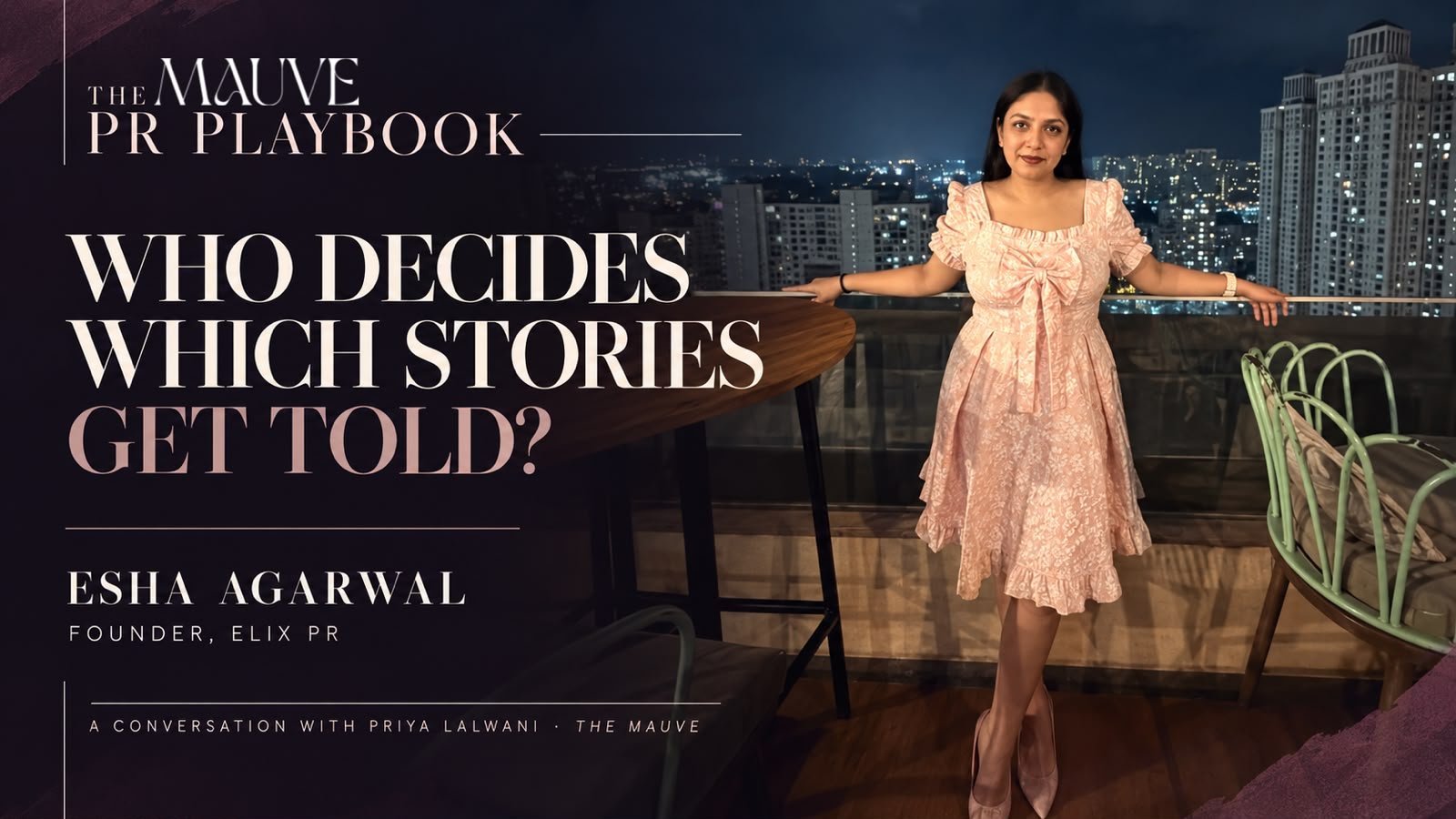
In the inaugural edition of The Mauve’s new series, Priya Lalwani speaks with Esha Agarwal, Founder of ELIX PR, about the realities of media relations, the growing influence of paid placements and what it takes to build meaningful relationships between PR agencies and publications.
Introducing The PR Playbook
Behind every headline is a conversation. Behind every published story is a decision. And behind the relationship between a brand and a publication lies an entire ecosystem of pitches, editorial judgement, commercial priorities and professional trust.
Public relations is often viewed through the lens of visibility: who gets featured, which publication carries the story and how far the coverage travels. Yet, the process that leads to a story being published is far more nuanced. What makes one pitch stand out while another goes unanswered? How do PR professionals determine which publications deserve a place on their media lists? And where does editorial merit stand in an industry increasingly shaped by commercial collaborations?
These are the questions that The PR Playbook, a new series by The Mauve, seeks to explore.
Through conversations with PR professionals, communications leaders and industry insiders, the series looks beyond the final headline to examine the thinking, relationships and decisions that shape the media landscape. It brings together perspectives from both sides of the conversation: the people pitching stories and the publications deciding which ones deserve to be told.
For its inaugural edition, Priya Lalwani, Founder and Editor of The Mauve, sits down with Esha Agarwal, Founder of ELIX PR, who brings a global perspective to luxury communication. From identifying what makes a story genuinely newsworthy to navigating paid media opportunities and building meaningful relationships with emerging digital publications, Agarwal shares her insights into an industry negotiating the balance between editorial integrity and commercial realities.
The Conversation
The Art of Getting a Story Noticed
Priya Lalwani, The Mauve: What makes a story genuinely newsworthy, and what determines whether it gets pitched?
Esha Agarwal: A story needs to stand out from what competitors are already saying and be relevant to the current landscape. Generic, repetitive messaging rarely captures attention. We look for a fresh perspective, a compelling hook and something that genuinely interests the reader.
Priya Lalwani, The Mauve: How do you decide which publications make it to your media list?
Esha Agarwal: It depends on the brand’s objectives, target audience and positioning. Every brand has different needs, so we evaluate publications based on their relevance, credibility, audience and ability to communicate the brand’s story effectively.
Priya Lalwani, The Mauve: What makes a publication valuable to a PR agency beyond its readership numbers?
Esha Agarwal: It’s about the quality of storytelling, the prominence given to a brand and how thoughtfully its narrative is presented. A meaningful, detailed feature that communicates a brand’s value can often be more impactful than a brief mention in a publication with a larger readership.
The Business of Media: Where Editorial Meets Economics
Priya Lalwani, The Mauve: How frequently do you encounter media houses requesting payment to publish a client’s story?
Esha Agarwal: We encounter paid opportunities quite frequently today. Commercial collaborations have become a significant part of the media landscape, particularly in lifestyle, fashion and luxury. The key is understanding what the opportunity offers and whether it aligns with the brand’s objectives.
Priya Lalwani, The Mauve: Has media coverage become increasingly pay-to-play, particularly in lifestyle, fashion and luxury?
Esha Agarwal: Yes, paid and barter-based opportunities have become increasingly common in these sectors. While commercial partnerships are understandable, I believe there should also be sufficient room for organic editorial coverage where stories are selected on their own merit.
Priya Lalwani, The Mauve: How do you distinguish between earned editorial coverage, sponsored content and advertorials?
Esha Agarwal: Ideally, earned editorial coverage is driven by the merit of the story, while sponsored content and advertorials involve a commercial arrangement. In practice, the distinction can sometimes become less apparent, which is why transparency around the nature of a placement is important for both brands and readers.
Priya Lalwani, The Mauve: When a publication requests payment, how do you evaluate whether the investment is worthwhile for your client?
Esha Agarwal: We assess the opportunity based on readership, audience relevance, digital presence, social media following and engagement, as well as the quality and prominence of the proposed feature. We then share our recommendation with the client, who makes the final decision based on their objectives and budget.
Priya Lalwani, The Mauve: In your experience, how much does today’s media coverage depend on the strength of a story versus the budget behind it?
Esha Agarwal: Both can play a role, depending on the nature of the opportunity. Strong stories remain essential for earned editorial coverage, while budgets influence access to paid placements. The challenge is ensuring that compelling stories continue to receive consideration on their own merit, irrespective of the brand’s marketing budget.
The Changing Media Landscape
Priya Lalwani, The Mauve: What separates publications that consistently receive pitches from those approached only occasionally?
Esha Agarwal: Established publications often benefit from years of credibility, recognition and industry presence. However, consistency also depends on editorial relevance, audience alignment and the quality of coverage. Publications that offer meaningful storytelling and maintain strong professional relationships are more likely to remain on a PR agency’s media radar.
Priya Lalwani, The Mauve: How do you evaluate emerging digital publications with smaller but highly relevant audiences?
Esha Agarwal: I see significant potential in emerging digital publications. They can offer focused audiences, more detailed storytelling and opportunities for brands to communicate their narratives effectively. Beyond reach, I look at audience relevance, content quality, engagement and how thoughtfully a publication presents the brand.
Priya Lalwani, The Mauve: What can publications do to become more credible and valuable media partners for PR agencies?
Esha Agarwal: Transparency, consistent communication and editorial independence are essential. Creating opportunities for genuinely newsworthy stories, maintaining clarity around paid offerings and communicating professionally with PR teams can build stronger relationships. A balance between commercial sustainability and editorial credibility benefits the entire industry.
Priya Lalwani, The Mauve: What would encourage your agency to pitch a publication like The Mauve more frequently?
Esha Agarwal: Strong editorial storytelling, a relevant audience and meaningful brand representation would encourage us to pitch more frequently. Publications that understand a brand’s narrative, offer thoughtful coverage and maintain clear communication can become valuable long-term media partners.
One Final Thought
Priya Lalwani, The Mauve: If you could change one thing about the relationship between PR agencies and media houses today, what would it be?
Esha Agarwal: I would encourage greater transparency and mutual respect. Not every pitch needs to result in coverage, and not every opportunity can be organic—that is understandable. However, clear communication, timely responses and professional courtesy go a long way. Both PR professionals and journalists play an important role in bringing stories to the right audiences, and a collaborative relationship benefits everyone.
Beyond the Pitch: What the Industry Needs to Rethink
Agarwal’s responses point towards a distinction that sits at the heart of modern public relations: visibility and value are not necessarily the same thing.
A placement may deliver reach, but the context in which a brand appears, the quality of the storytelling and the relevance of the audience all influence its longer-term impact. For luxury brands in particular, where perception, positioning and the details of presentation matter, the right story in the right publication can carry significance beyond the numbers.
For emerging digital publications, the conversation raises an equally important question about growth. Building meaningful relationships with PR agencies requires more than a willingness to publish. It calls for a distinct editorial identity, a clear understanding of the audience, consistent storytelling and transparency around commercial offerings. Credibility is built through consistency rather than size alone.
The discussion also highlights the importance of recognising the different roles of earned and paid media. Commercial collaborations can offer brands valuable opportunities, but they should not diminish the space available for stories that merit attention independently. For agencies and publications alike, clarity about the nature of a placement helps establish realistic expectations and preserves trust.
Perhaps the most important takeaway is that the relationship between PR and journalism need not be adversarial. Agencies need publications that can communicate a client’s story effectively; publications need access to relevant information, credible sources and compelling narratives. Neither side is obliged to agree with every request, but both benefit from clear expectations, timely communication and professional respect.
As The Mauve opens The PR Playbook, the intention is not simply to understand how stories get published, but to examine the systems, relationships and decisions that determine which stories find their audience.
Because in an industry built on communication, the conversation behind the story deserves to be told, too.
About Esha Agarwal
Esha Agarwal is the Founder of ELIX PR, a public relations agency bringing a global perspective to luxury communication.
About The PR Playbook
The PR Playbook is an ongoing editorial series by The Mauve, featuring conversations with PR professionals, communications leaders and media insiders. The series explores newsworthiness, media relations, editorial credibility and the evolving relationship between public relations and journalism.
Interviewed by: Priya Lalwani, Founder and Editor, The Mauve.