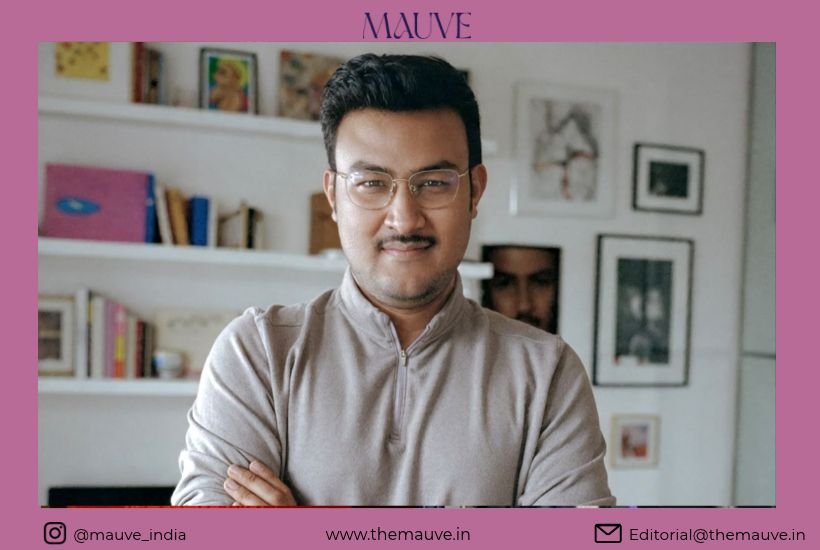
The Los Angeles-based filmmaker brings a narrative-driven approach to two films featuring Grammarly’s AI assistant, Superhuman Go, blending student dilemmas, situational humour and product storytelling.
Los Angeles | 21 October 2026
A looming deadline, a birthday cake waiting to be baked and a fishing trip that cannot come soon enough. In the hands of filmmaker Kartikye Gupta, the everyday conflicts of student life become the starting point for two character-led advertising films for Grammarly’s AI assistant, Superhuman Go.
The Los Angeles-based filmmaker, editor and visual storyteller recently worked on Your Paper + Grammarly = Good Chemistry and From Group Project to Gone Fishing, two YouTube films that explore how AI can support students through the demands of academic writing without losing sight of the lives unfolding around them.
Rather than approaching the campaigns as conventional product demonstrations, Gupta builds each film around a familiar dilemma. The result is storytelling in which the product finds its place within the narrative, shaped by the characters, their competing priorities and the small moments of humour that make their situations relatable.
When chemistry meets cake-making
In Your Paper + Grammarly = Good Chemistry, a chemistry student finds himself caught between completing his final paper and keeping a promise to bake one of his signature cakes for his best friend’s birthday. With an academic deadline approaching and a personal commitment to honour, the film draws its humour from the increasingly complicated business of balancing both.
Superhuman Go enters the story as a learning partner, helping the student overcome the initial difficulty of getting started before refining his writing. Chemistry becomes more than the protagonist’s academic subject; it also provides the film with a creative vocabulary for exploring the ingredients that make writing work.
The premise allows the campaign to connect the process of developing an academic paper with the familiar experience of searching for the right formula, giving the film a narrative identity beyond its central product message.
From group-project anxiety to the promise of a fishing trip
The second film, From Group Project to Gone Fishing, shifts the setting from chemistry to economics, following a student whose group project, a significant component of her grade, is due on the same day as a much-anticipated fishing trip.
Here, Gupta draws on the contrast between academic responsibility and the prospect of time away from college. Economics and fishing supply the film with a distinctive language of their own, with references to value, investment, yield, upside, reels and catches woven into the narrative.
As the student works towards completing her submission, Superhuman Go supports the process of picking up the project again, developing ideas and refining the final piece. The product remains connected to the character’s immediate challenge, while the wordplay gives the film its own rhythm and personality.
Together, the two films demonstrate how different academic disciplines can become creative storytelling devices, each offering a distinct way to communicate the role of AI in a student’s writing journey.
Finding the story inside the brief
For Gupta, the creative challenge lay in ensuring that the films worked first as stories, with the product message emerging naturally from the situations rather than interrupting them.
“While working closely with Grammarly, I learned that they wanted these films to feel like stories about real student situations rather than traditional product demonstrations. Both characters have something important to finish, but life is happening around them. That allowed us to build humour and personality into the films while showing Superhuman Go as a natural part of their process. For me, the interesting part was finding the balance between making the films entertaining and ensuring that the product’s role remained clear without interrupting the story,” says Gupta, co-founder of ScrollX.io.
He adds, “The strongest branded stories are the ones where the message grows out of the character and the situation. With these films, chemistry, baking, economics and fishing gave us completely different worlds to play with. The challenge was to make each world feel distinctive while keeping the larger idea simple, i.e., students can use the right support to get unstuck, develop their ideas and communicate them better. That is where the storytelling and the product naturally came together.”
A storytelling-led approach to branded films
Known for projects such as Dr. Elevator and Please Don’t Call the Cops, Gupta brings his experience across filmmaking, editing and visual storytelling to the campaigns. His approach places character and narrative at the centre, using the specifics of each student’s situation to establish the film’s tone before bringing the product into focus.
The two Grammarly films offer contrasting creative worlds: one built around the interplay of chemistry and baking, the other around economics and fishing. Yet both are held together by the same premise — that the most effective way to communicate a product’s value can be to show how it fits into a recognisable human experience.
As AI tools become an increasingly visible part of the conversation around education and writing, these films take a story-first route to demonstrating their place in students’ academic routines.
Watch the films
- Your Paper + Grammarly = Good Chemistry: https://youtu.be/AMMDfSvAH_0
- From Group Project to Gone Fishing: https://youtu.be/5zjMy9AsAqw
For more information, visit ScrollX.io.